
How to Calculate Your Volume Before Calling Sand Suppliers
Embarking on a new landscaping or construction project is an exciting endeavor. Whether you are laying a beautiful paver patio for backyard barbecues, building a sandbox for your children, or managing a large-scale commercial structural build, there is one foundational material you will undoubtedly need: sand. However, one of the most common stumbling blocks for both weekend DIY enthusiasts and professional contractors is knowing exactly how much material to order.
Guessing your required volume can lead to costly mistakes, severe project delays, and a great deal of frustration when reaching out to local sand suppliers. Going into a purchase blindly is a recipe for disaster. In this comprehensive, step-by-step guide, we will walk you through the precise mathematics and methods to calculate your required volume before you even pick up the phone to place your order.
Understand the Importance of Accurate Measurements
Before we dive into the mathematics of volume calculation, it is crucial to recognize why precision matters so much in the heavy materials, construction, and landscaping industry. When you order bulk materials, you are paying not only for the product itself but also for the delivery and transportation logistics. If you underestimate your project's requirements, you will inevitably run out of material halfway through the job. This forces you to halt your progress, place a second order, and pay an entirely separate delivery fee, effectively destroying your budget and timeline.
Conversely, if you drastically overestimate how much material you need, you will end up paying for excess product that you have absolutely no use for. Furthermore, you will be left with a massive pile of aggregate sitting in your driveway or on your property, which you then have to pay a secondary service to haul away. Taking a few minutes to properly measure your site eliminates these financial risks and ensures a seamless, stress-free delivery and installation process.
Recognize the Growing Global Demand for Sand
You might think of this common aggregate as an infinite resource that can be mindlessly ordered, but it is actually one of the most heavily consumed natural materials on the planet. From large-scale concrete production and road base construction to glass manufacturing and residential landscaping, the modern world is quite literally built on it. As urbanization continues to expand rapidly across the globe, the demand for high-quality, processed aggregates has never been higher.
To put this immense scale into perspective, the global market is experiencing unprecedented growth and consolidation. According to Coherent Market Insights, sand and gravel will dominate the global construction aggregates market in 2026 with a 42.7% share. With so much material moving through the global supply chain, it is more important than ever for consumers and contractors to be efficient with their orders, reducing unnecessary waste and streamlining local supply lines.
Identify the Shape of Your Project Area
The initial practical step in calculating your volume is determining the geometric shape of the area you intend to fill. Mathematics is only helpful if you apply the correct formulas, and different landscape shapes require entirely different approaches. Take a walk around your project site and visually break it down into standard geometric shapes to make your calculations easier.
Most standard patios, driveways, walkways, and basic sandboxes are simple rectangles or squares. On the other hand, fire pit bases, circular retaining walls, and round above-ground pool foundations are circles. If you have an irregularly shaped garden bed, a winding pathway, or a curved retaining wall, do not panic. Simply break the complex, winding shape into a series of smaller, distinct rectangles or squares. You can calculate the volume for each of these smaller sections individually and then add them all together at the end to get your grand total.
Select the Right Type of Sand
Knowing your required volume is only half the battle; knowing exactly what type of product you need is equally critical. The terminology can sometimes be confusing when speaking with different sand suppliers, as there are several distinct variations designed for specific applications, each with its own specific weight and density profile.
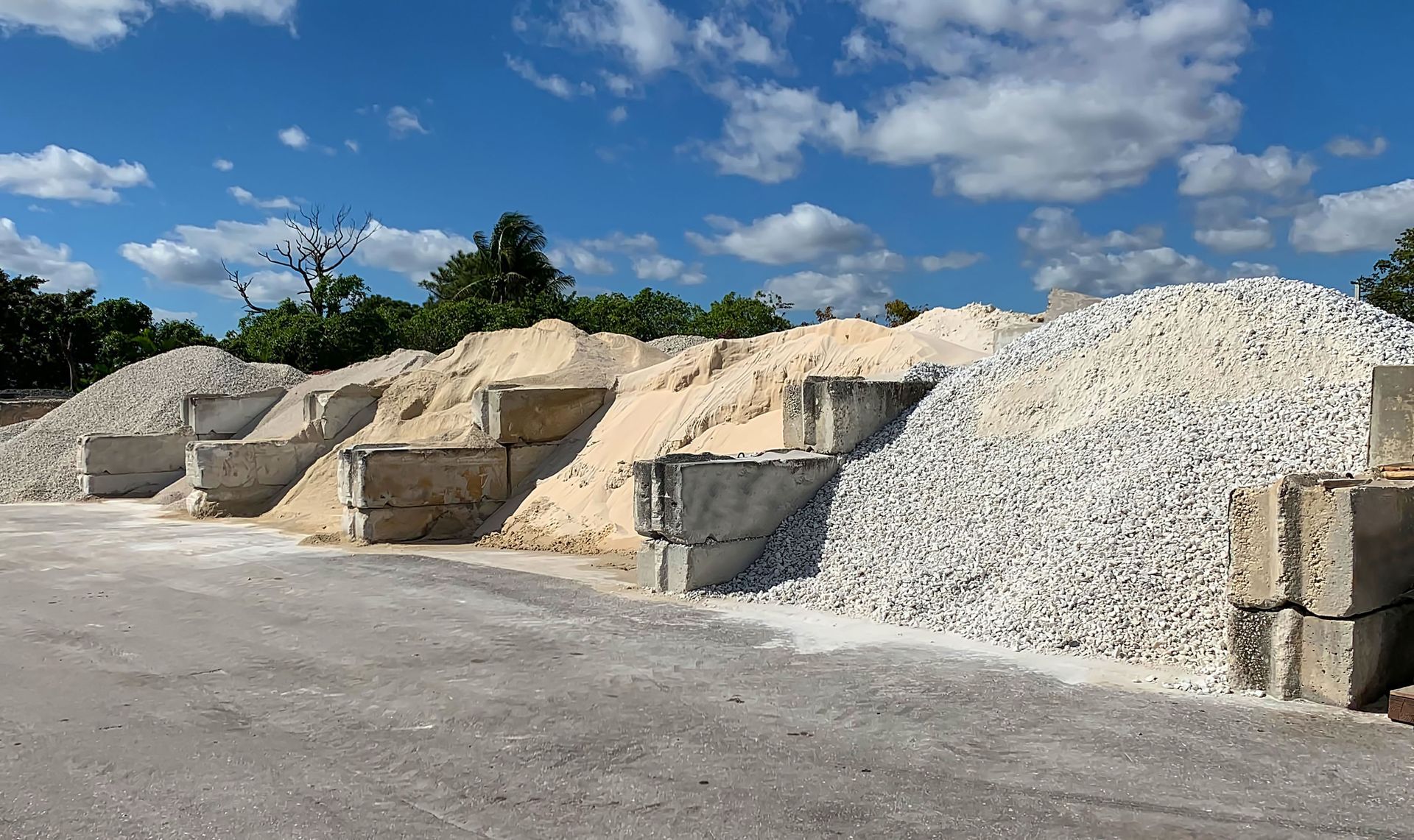
Concrete sand, for example, is highly coarse and washes clean, making it the perfect sturdy base layer for interlocking pavers or for mixing directly with cement. Masonry sand is much finer and smoother, primarily used for creating mortar for bricklaying, block walls, or filling in the joints between patio stones. Fill sand is typically unwashed and may contain small rocks, pebbles, or dirt; it is highly affordable and perfect for building up elevation or filling in large foundation holes. Finally, play sand is repeatedly washed, carefully screened, and completely safe for children's play areas. Identifying the correct product for your specific application ensures that your calculated volume translates into a successful, long-lasting project.
Measure the Dimensions of Your Space
Once you know your geometric shape and your specific material type, it is time to take out the measuring tape, stakes, and string line. For a rectangular space, you will need to measure the total length and the total width. For a circular space, you need to measure the diameter (the straight line directly across the center of the circle from edge to edge) and divide that value in half to find your radius.
Regardless of the shape of your project, there is one measurement that is absolutely critical: the depth. How deep does your layer actually need to be? A standard paver base usually requires a thin layer of sand over a crushed gravel base. A children's sandbox might require a significantly deeper layer for safe play. When taking these measurements, always convert your numbers into feet. Keeping all your measurements uniformly in feet will make the subsequent calculations incredibly easy and accurate.
Calculate the Cubic Footage of Your Project
Now that you have your length, width, radius, and depth neatly written down in feet, you can easily calculate the cubic footage. This is the baseline mathematical value most sand suppliers will ask for when you begin discussing your project specifications.
For a rectangular project, you simply multiply Length by Width by Depth. For example, if you are building a backyard patio, you multiply its length, width, and depth in feet to determine your baseline cubic feet.
For a circular project, the mathematical formula multiplies Pi by the Radius squared by the Depth. Taking the radius of your circular seating area and multiplying it according to this formula yields your total cubic feet.
Convert the Cubic Footage to Yards or Tons
While knowing your accurate cubic footage is excellent for your own notes, the heavy construction and aggregate industry typically does not deal in cubic feet. You will need to convert this baseline value into cubic yards or tons, as this is the standard industry metric used by wholesale sand suppliers across the country.
To find your total cubic yardage, simply take your calculated cubic feet and divide that value by the standard conversion factor for cubic feet in a cubic yard.
Furthermore, some transport companies and quarries prefer to sell material by total weight (tons) rather than volume (yards). As a general rule, a cubic yard of sand weighs several thousand pounds, depending entirely on the moisture content at the time of loading. It is always a good idea to have both your cubic yardage and your estimated tonnage calculated so you are fully prepared for the ordering process, no matter how the company bills their materials.
To prevent coming up short on your final day of work, always add a percentage contingency buffer to your final calculated value. This is a vital rule of thumb recommended by top sand suppliers to ensure you have enough material to achieve the proper structural density and complete coverage. It is always better to have a tiny bit left over to fill in landscaping gaps than to fall desperately short when your project is nearly complete.
Contact Small's Sand & Gravel Inc to browse our extensive aggregate inventory, consult with our material experts, finalize your volume order, and schedule a prompt, professional delivery right to your job site.
Share On: